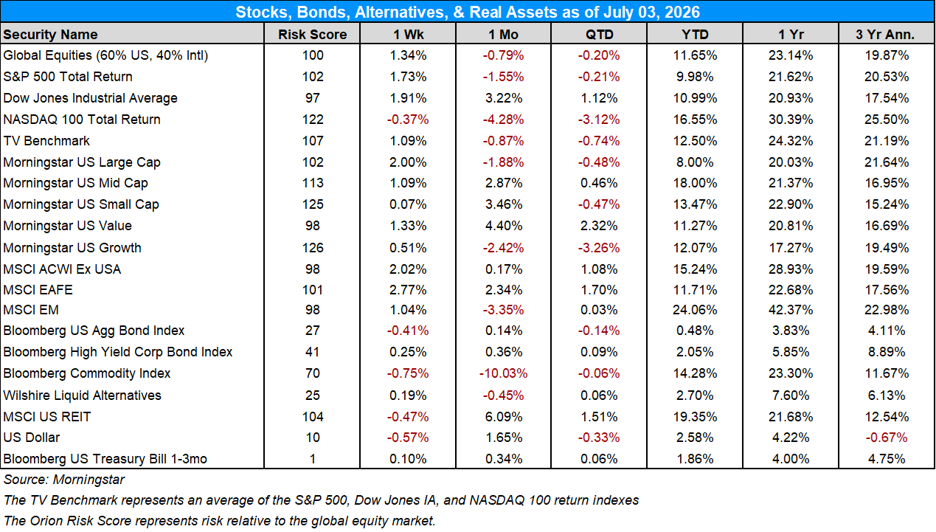
As we enter the second half of 2026, one theme has become increasingly clear: markets are rewarding fundamentals over headlines. Investors have navigated geopolitical tensions in the Middle East, persistent inflation, shifting Federal Reserve expectations, and slowing economic growth—yet equities have continued to advance, supported by strong corporate earnings and a resilient economy.
At the same time, market leadership is beginning to broaden. While artificial intelligence continues to dominate headlines, value stocks, industrials, transportation companies, and international markets have all played increasingly important roles in this year's gains. That's a healthy sign. Historically, bull markets built on broad participation have tended to be more durable than those driven by only a handful of companies.
As long-term investors, it's important to remember that markets rarely move in a straight line. Short-term uncertainty is inevitable, but disciplined investing has consistently rewarded those who stay focused on fundamentals rather than emotions.
What Happened
- Equity markets finished the quarter on a strong note as easing tensions in the Middle East, moderating oil prices, and another exceptional earnings season helped lift investor confidence. Major U.S. indexes reached new highs while international markets and emerging markets continued to outperform many expectations.
- Corporate earnings remained the primary driver of market performance. First-quarter S&P 500 earnings grew approximately 28% year over year—the strongest pace since 2021—and Wall Street expects another quarter of earnings growth exceeding 20% as reporting season begins.
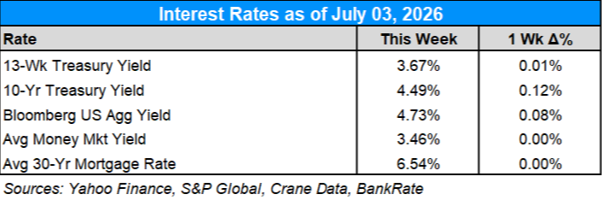
- The Federal Reserve held interest rates steady at Chairman Kevin Warsh's first meeting but adopted a more hawkish tone. Several policymakers now anticipate at least one additional rate increase this year as inflation remains above the Fed's long-term target.
- Inflation pressures continue to moderate in some areas, particularly energy prices, but wage growth has failed to keep pace with inflation for a second consecutive month, reinforcing the Fed's cautious approach
What We’re Watching
- Second-quarter earnings season. Strong corporate profits have been the backbone of this bull market. Investors will be watching whether earnings continue to justify current valuations.
- Federal Reserve policy. Markets have shifted dramatically from expecting multiple rate cuts earlier this year to recognizing the possibility of additional rate hikes if inflation remains stubbornly high.
- Inflation and consumer spending. While inflation has eased from its peak, it remains above the Fed's target. Consumer spending and employment data will help determine whether the economy continues its gradual expansion.
- Market leadership. We're watching whether the recent rotation into value stocks, industrials, transportation, and international equities continues, potentially creating broader investment opportunities beyond mega-cap technology.
Investor Takeaway
One of the biggest stories this month wasn't that the Federal Reserve left interest rates unchanged—it was the message delivered by new Federal Reserve Chairman Kevin Warsh. During his first press conference as Chair, Warsh made a statement that quickly captured Wall Street's attention:
"Inflation is a choice."
His point was that while inflation can be influenced by many factors—including government spending, energy prices, supply chains, and global events—the Federal Reserve has both the responsibility and the tools to preserve the purchasing power of the U.S. dollar. Warsh emphasized that inflation has remained above the Fed's 2% target for nearly five years and made it clear that restoring price stability will remain a top priority.
Markets initially reacted negatively to the Fed's more hawkish tone, as investors recognized that interest rates may remain higher for longer than many expected earlier this year. While higher borrowing costs can create short-term headwinds for both consumers and businesses, a disciplined approach to inflation ultimately supports a healthier economy by protecting savings, encouraging investment, and creating a more stable foundation for long-term growth.
Why It Matters to Your Financial Plan
Inflation is one of the greatest threats to long-term wealth because it quietly reduces the purchasing power of your savings over time. While no one can predict exactly where interest rates or inflation will be a year from now, history has consistently shown that investors who remain disciplined through changing economic cycles are better positioned than those who try to adjust their portfolios based on every Federal Reserve meeting or headline.
Rather than reacting to short-term uncertainty, continue focusing on the fundamentals that have historically driven successful investing: maintaining a diversified portfolio, investing consistently, and allowing time and compounding to work on your behalf. Markets will continue to experience periods of optimism and concern, but long-term investors who stay invested have historically been rewarded for their patience.
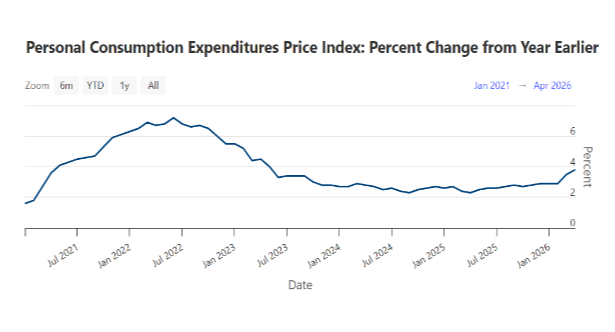
Source, US Bureau of Economic Analysis May 2026
Long-Term Perspective
Today's Leaders Aren't Always Tomorrow's Leaders
One of the healthiest developments we've seen this year has been the broadening of market leadership. While artificial intelligence and large technology companies continue to play an important role, investors are increasingly seeing strength in industrials, financials, transportation companies, value stocks, small-cap companies, and international markets. This shift—often referred to as "market broadening"—is generally viewed as a positive sign for the overall health of a bull market.
History reminds us that no single sector, company, or investment theme leads forever. Leadership rotates as economic conditions change, innovation evolves, valuations adjust, and investor expectations shift. Investors who concentrate too heavily in whatever has recently performed best often find themselves chasing yesterday's winners rather than preparing for tomorrow's opportunities.
Why It Matters to Your Financial Plan
A well-diversified portfolio is designed with this reality in mind. Rather than attempting to predict which sector will lead next, diversification allows investors to participate as leadership changes over time. While it can be tempting to increase exposure to whatever is currently outperforming, history has consistently rewarded those who remain disciplined, rebalance periodically, and stay invested through changing market cycles.